
Llywelyn's window, St Davids
- firedonkeyproducti
- Aug 8, 2025
- 3 min read
Updated: Aug 14, 2025
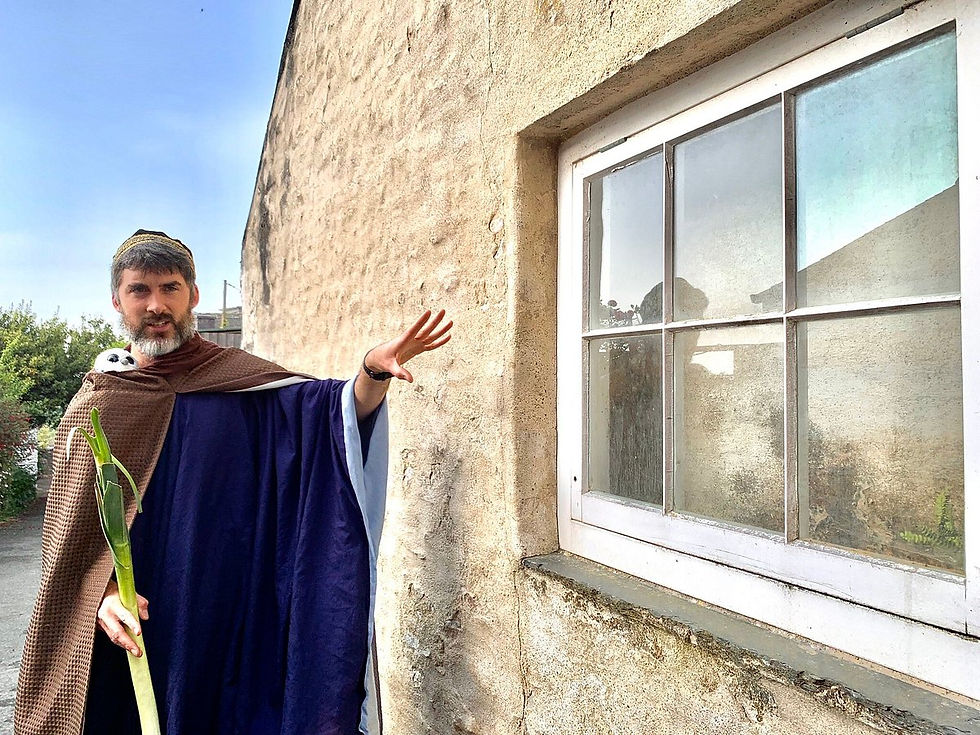
Visit of Llywelyn the Great to St Davids in 1206
Just one of many unsung landmarks in Tyddewi.
In 1206, Llywelyn the Great/Llywelyn Fawr, the King of Gwynedd, set out on an important trip to St Davids. He had big dreams of bringing the old Welsh kingdoms together and making Wales and independent entity, free from English control. This visit was a key moment in Welsh history and showed just how important St Davids was as a hub of power and spirituality back then.
The Historical Context
In the late 1100s and early 1200s, Wales was a patchwork of different principalities, each with its own leader. Llywelyn aimed to unite these areas under one flag. He was all about pushing back against English influence and standing up for Welsh independence.
Llywelyn's Stay at St Davids
On a visit to St Davids, Llywelyn stayed at an inn on the site of the Farmer's Arms. History tells us he had a room with a view of a back alley, which wasn't quite what he hoped for.
The Bricking Up of the Window
Llywelyn had requested a view of the cathedral from his royal suite. Not thrilled with the view, which comprised of a back alley frequented by drunken locals and members of the monastic brotherhood passing by at all hours, Llywelyn allegedly ordered the window be bricked up. But this wasn't just about the view; it showed his bigger dream for a united Wales. Blocking the window was like saying he wanted to shut out the past and focus on a brighter future for Wales.
The Battle Against the Marcher Lords
During this period, Llywelyn faced significant challenges, particularly from the Marcher Lords, who were powerful feudal lords in Wales. Their ongoing conflicts with Llywelyn highlighted the struggle for Welsh autonomy and the resistance against external domination.
The Rediscovery and Renovation of the Window
In 1982, after years of campaigning by local historians and community members, the window that Llywelyn had bricked up was rediscovered. This significant find sparked interest in the area's rich history. Following the rediscovery, the local council undertook a renovation of the window, and by 2017 the window was restored as a historical landmark that pays homage to Llywelyn's legacy and the broader narrative of Welsh independence. Of course during this time the the room behind the window had been converted into a pub toilet.
The Significance of St Davids
St Davids, famous for its cathedral and spiritual importance, was a big deal for pilgrims in medieval Wales. Llywelyn's presence there boosted its status as a centre of power and spirituality. His visit highlighted the town's role in the political scene of Wales during those turbulent times.
Legacy of Llywelyn's Mission
Llywelyn's push to unite Wales faced ups and downs. His time as ruler was a crucial chapter in Welsh history, and his legacy still pops up in today's talks about Welsh identity and independence. His visit to St Davids is a testament to his dreams and the enduring spirit of the Welsh people.
Llywelyn the Great's visit to St Davids in 1206 was more than just a royal stopover; it captured the hopes of a nation striving for unity and independence. His story about being unhappy with a simple inn window view reminds us of the bigger fight for sovereignty that marked this era in Welsh history. Today, the Farmer's Arms and the area around it offer a glimpse into this rich history, inviting visitors to think about the past and its influence on today's Wales.


Comments